What a Geography Study Can Tell Us About Odor Thresholds
A study of 1,046 participants examined detection sensitivity across locations. Its outcome is a specific kind of smell measurement.
Published 2026-11-05 · Fragrentis editorial team2 min read
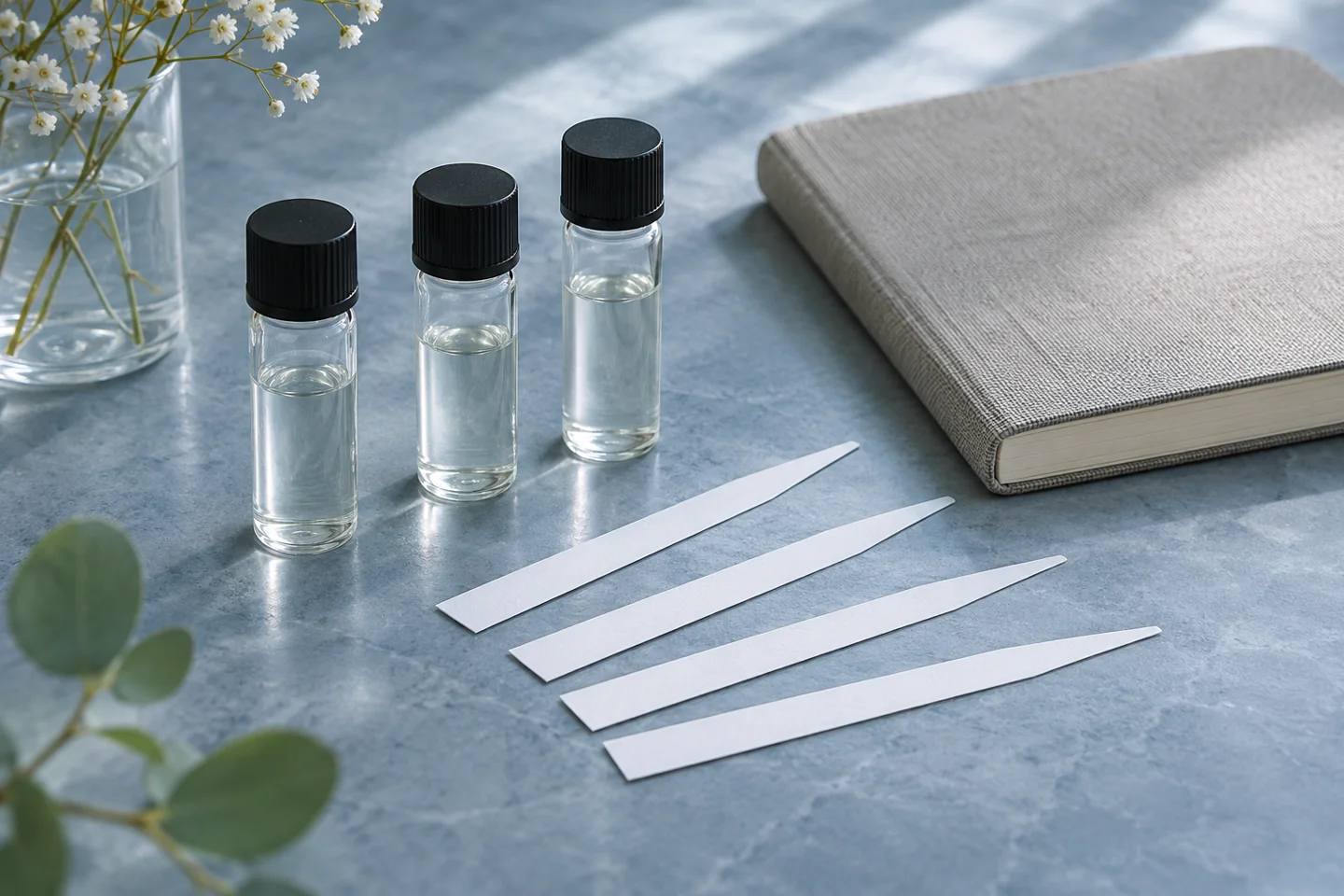
A study that finds a difference in smell sensitivity across test locations can sound like a map of what people like to wear. Start by looking at the outcome. A detection threshold concerns how weak a stimulus can be before a person can detect it under the test conditions. Preference asks how a person feels about a smell they encounter.
Read the result at the level it was measured
Reichert and colleagues reported data from 1,046 participants across 19 locations in Scientific Reports on February 18, 2026. The authors’ abstract reports that location accounted for 17–20% of variance in chemosensory sensitivity in their analysis. This is a multicenter human study. The percentages describe variation in the study’s measures as analyzed by the researchers. They do not give a percentage change in a particular person’s sensitivity after moving.
Imagine two participants taking a detection task. One notices a stimulus at a lower test concentration. Both could still prefer the same familiar perfume. The example shows why detection, identification and liking each need their own outcome. A result about one of these measures cannot answer the other questions on its own.
Ask what a location variable can capture
People tested at different locations can also differ in their histories, environments and other characteristics. A location term can summarize differences among study groups without identifying which factor produced them. In this case the authors also considered individual factors. A reader should keep the measured association and any explanation of its causes separate.
The report’s sample and methods also matter when translating its result. Nineteen locations are nineteen sets of observations, not a complete description of every region. Before interpreting a local result, look for the stimuli, recruitment, measurement conditions and the distribution of individual scores. An average can leave substantial variation within a group.
Match the next question to the right evidence
If the question is whether a customer likes a finished perfume, a direct comparison of that perfume with relevant alternatives would be closer to the task. If the question is whether a particular environment influences detection, a follow-up design would need to measure or control the proposed exposure. Both questions are reasonable next steps, and each calls for different evidence.
For everyday reading, keep a note beside a reported percentage that says what varied, who was studied and how it was measured. This article summarizes the authors’ abstract and the study scope, with the published paper linked below. Use a personal sample to explore your own preferences without treating a group-level association as a prescription.
Sources and illustration
- Reichert and colleagues, Human olfactory sensitivity varies across geographical locations. Scientific Reports, February 18, 2026, DOI 10.1038/s41598-026-38727-w. Accessed November 4, 2026.
Illustration generated with AI; the bottles shown are generic.
A Fragrentis editorial publication. Editorial policy and disclosure.