Why Perfume Smells Different on Paper and Skin
Use paper for a shortlist and ordinary wear for a personal decision, with separate records.
Published 2026-10-14 · Fragrentis editorial team2 min read
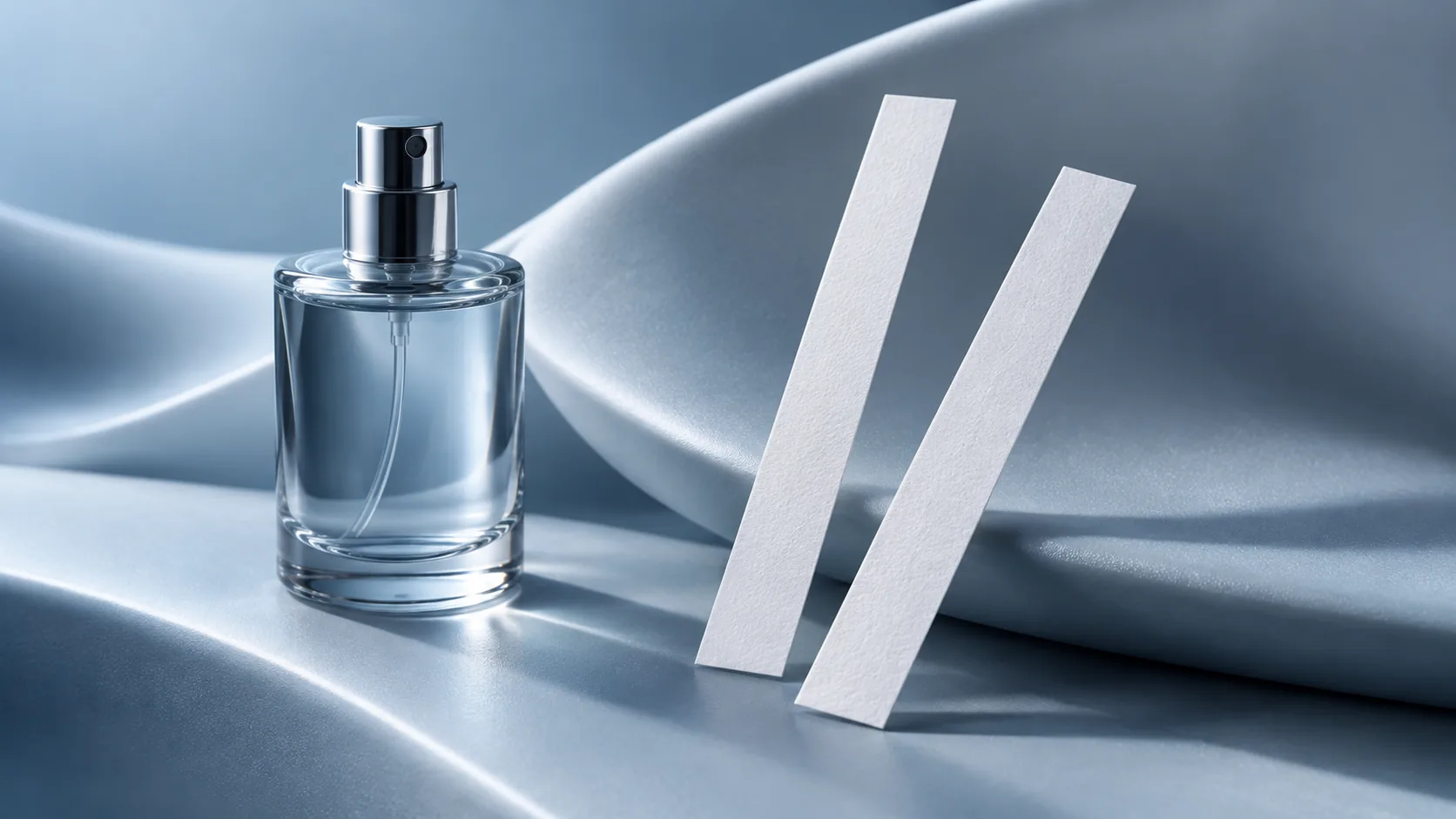
A blotter and a wear on skin answer different questions. A paper comparison can help sort several candidates before choosing one to wear. A skin trial can help assess whether you enjoy a product in its intended use. Neither should be treated as a laboratory method for identifying the full formula or guaranteeing the same result for everyone.
Give each method a purpose Use paper to keep candidate identities organized. Label the strip with the exact product and version, keep strips separate, and record the time of application. Follow any sampling guidance supplied by the maker or retailer. Do not combine several fragrances on one strip and then expect an individual description to remain clear.
Use a skin wear only with products intended for that use and in accordance with their directions. Do not apply raw perfumery materials as if they were finished consumer perfumes. A brief paper test cannot establish suitability for skin, and this guide is not an allergy test or a safety assessment.
Keep the questions distinct For the blotter, ask whether the general direction interests you and which comparison deserves a closer look. For the wear, ask whether you enjoy the scent in your ordinary setting and whether you still want to wear it later. An apparent difference between the two is an observation to record, not proof of a particular reaction or an individual's unique chemistry.
An invented record might have two rows: “Paper: bright opening, worth trying,” and “Wear: softer impression later, comfortable for an ordinary afternoon.” The second row does not invalidate the first. It adds a different context. Keep amount, time and setting visible so a later review does not merge the two into one claimed test.
Carry only the useful result forward Avoid comparing one sample repeatedly while leaving another unchecked for hours, then assigning them a precise ranking. If the comparison is too crowded, reduce it. NIDCD's explanation of smell reminds us that detection is a sensory process; a casual observation is not a measurement of material remaining on either surface.
Finish with an action: try a full wear later, revisit a question, or pass. You do not need to solve why every difference occurred to make a reasonable choice. The two methods work well together when paper supports a shortlist and ordinary wear supports a personal decision. They become less useful when either is presented as a universal performance test.
Sources and further reading
A Fragrentis editorial publication. Editorial policy and disclosure.