Why Does Perfume Last Longer on Some People?
Define what you observed before turning a fragrance wear into a claimed number of hours.
Published 2026-10-14 · Fragrentis editorial team2 min read
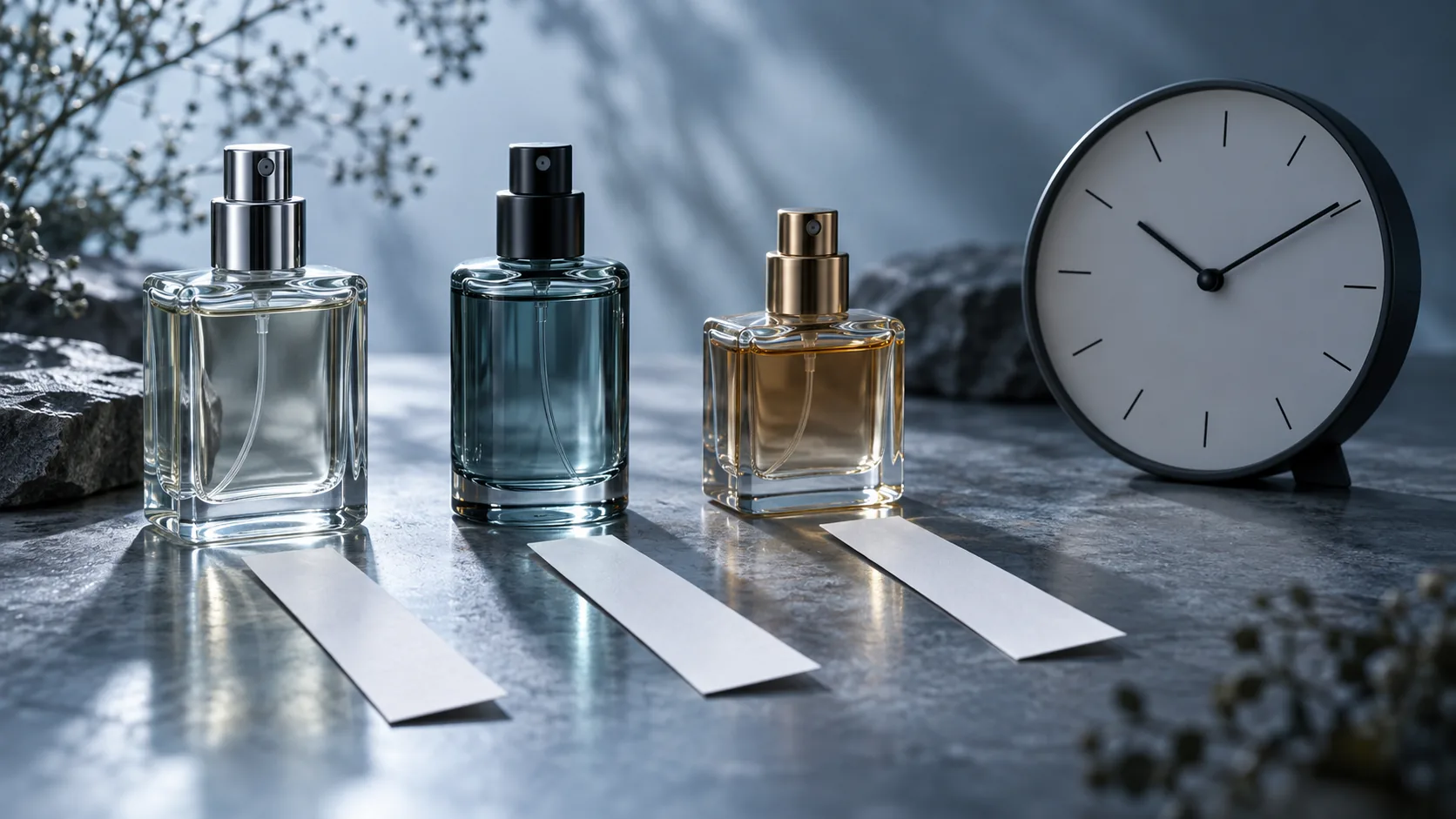
“It lasted all day” sounds precise until you ask what was observed. Was the wearer noticing it without trying? Did they smell it only close to the application point? Was someone else commenting? These statements describe different observations. A useful comparison starts by defining what you mean by longevity before assigning a number to it.
Separate the observation from the explanation Record what happened in plain language: noticeable nearby at lunch, apparent only at close range later, or no longer noticed by the wearer. Do not immediately explain the result with skin chemistry, weather or a supposed ingredient. Several aspects of an ordinary day change at once, and a single wear cannot isolate their effects.
Your sense of smell is a sensory process, not a chemical assay of what remains on the surface. NIDCD describes odor molecules activating olfactory receptors and signals reaching the brain. That explains why “I cannot notice it now” and “no fragrance material remains” are different claims. The first does not establish the second.
Make the record comparable Use the same product version and application method when comparing days, within the product's use instructions. Note the time, amount, main settings and any washing or additional application. Record these as context rather than presenting them as proven causes. If conditions differ substantially, do not treat the two observations as a clean experiment.
An invented worksheet entry might say: “Tuesday, familiar application, office day, noticed during the morning, not checked again until afternoon.” This is more honest than recording a six-hour lifespan when nothing was observed between those times. A long gap in checking is a gap in the record, not evidence of continuous performance.
Use several observations without overselling them Compare a few comparable wears and look for a practical pattern. Does this choice fit the period when you want to enjoy it? Does wanting to check or reapply become distracting? Answering those questions can help you choose without producing a ranking or an exact promise for other people.
If you write a review, state the context and the limits alongside the observation. Avoid saying that a concentration label guarantees a fixed number of hours or that someone else's different result proves the bottle is defective. Longevity is most useful as a clearly described experience under stated conditions. It becomes misleading when a rough impression is dressed up as a universal measurement.
Sources and further reading
A Fragrentis editorial publication. Editorial policy and disclosure.